Community Contribution #4
Technology is always in a state of motion, with many different goals in mind, but one that stands out the most: keeping people engaged. The intention of keeping people online and using platforms may be to have them connected to their community and the rest of the world. Although, now, if you spend any time on a social media platform and really question what you are looking at, the platform’s intentions are very clear: they are trying to make as much money as possible. Whether through literal subscriptions (like Instagram Plus or Snapchat+), an overwhelming amount of ads (YouTube or Pinterest), or by collecting your data (any platform that asks you to agree to terms and conditions or the use of cookies). These features are all types of default settings; you cannot escape them unless you pay (either with your money or your information), and they have all begun to feel quite ubiquitous. I was talking to my partner about this, and he told me about the term ‘feature creep,’ which has been plaguing a lot of online platforms because they all want to steal attention from other sites.
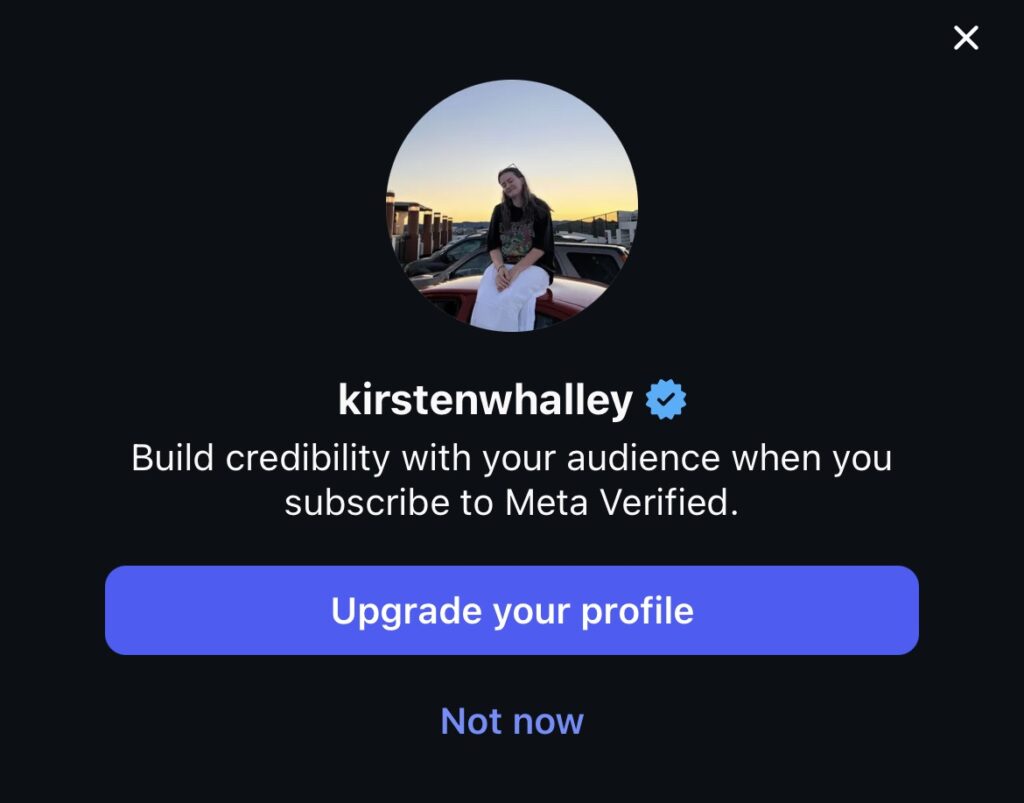
While I was taking a break from writing this, I went on Instagram and got this pop-up on my main page:
Another design choice that I have been noticing on social platforms has been the sea of notifications they send you. When you download an app, you are asked if you want to receive notifications. The app has default notification settings that may not align with how you intend to use the platform. For instance, I just recently downloaded and created a SubStack account. I made the account to join a book club, but ever since I’ve been getting notifications about content I may like to see based on my previous interactions on the site. Additionally, I made my account very late at night, and that is the only time of day that I get these messages, so I have yet to manually change the settings to align with my original intentions.
I cannot talk about overwhelming amounts of notifications without mentioning email. Even though the emails that hit your inbox are usually ones you solicit, it can get to be quite overwhelming. The combination of newsletters, subscriptions, and spam can really drown out the important messages, which can take over your experience and even sometimes lead you to making a new account altogether. The design choice of sending promotional emails to get people to engage has sparked a need for people to create a whole other account, commonly referred to as a ‘spam email,’ that you give out to a platform that you know, based on previous experiences, will send you many meaningless emails. Even though I’ve made myself a spam email, I still somehow have over 3,000 unread emails in my inbox, but because of the way the platform is designed, those will not go away until I manage them one by one. Which feels like an incredibly daunting task that will most likely be put off for a long time because I’ve been using email on a daily basis as I continue to nurture my PLN.