Community Contribution #1
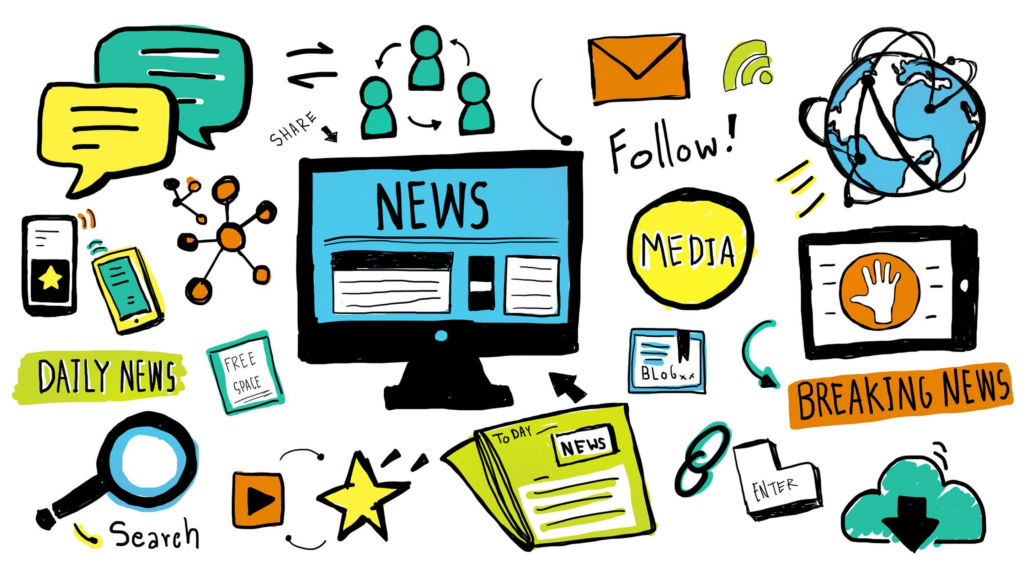
Digital Identity
Digital Identity (DI) describes how people show up online, from how they post and interact with media to what they search on a search engine (Stroller, 2016). If someone were using the internet and social media without any care for their DI, their reckless behaviour could follow them wherever they go. Although DI can also be used strategically and beneficially, specifically within the professional sphere. Employers are increasingly performing social media screening of potential new hires as part of their hiring process (Cotriss, 2026). The screening is mostly used to see if the candidate will fit into the work environment and to verify their resume, but if they discover something concerning during the screening process, they may just move on to the next resume. With this in mind, professionals, or people trying to start their professional careers, must be mindful of their DI and how it could appear to hiring teams. Although, DI’s could be used to someone’s advantage if they post and interact online in a way that supports and uplifts the path they wish to go down professionally.
Networking Platforms Used by Students
As a student, I have been told by many professors and professionals that I need to be using LinkedIn religiously before I even start thinking about a career. Friending people I’m acquainted with, left and right, keeping my work experience up to date, and interacting with sectors I’m interested in. With years of experience on social media sites, LinkedIn is unlike the rest; it is hyper-focused on the professional realm and current job market, making it hard to enjoy any time spent on the site. From this unpleasant experience, I recently branched out to Facebook to search for job opportunities and to make digital professional connections by use of job groups. These spaces are much more welcoming and not as formal, which has made the transition from student to professional seem less daunting and drastic.
My experience of using digital platforms to develop my professional network aligns with studies and articles that talk about how students are utilizing social media to build professional networks before they even start looking for a job in their desired industry. Cambron (n.d.) explained how LinkedIn has become a “near-universal job board” that helps with building professional connections, which anyone would agree with if they have visited LinkedIn.com. From an academic stance, Gutierrez (2016) highlighted the need for connectivism within the increasingly digital and networked era we are living in. Platforms like LinkedIn and Facebook provide excellent spaces for people, especially students, to start to build and maintain their professional networks. In the ever-evolving world we live in, we must stay up-to-date on what is happening within the industries we wish to take part in to help ease the transition to the professional world.
Expanding Your Professional Learning Network
You never know when opportunities will arise, keeping in mind that opportunities to expand your professional learning network are everywhere, expected or not, is very beneficial. Putting yourself out there to develop your skills and attitude will help further develop your professional learning network in both implicit and explicit ways (Rajagopal et al., 2012). In the beginning, it can be very nerve-racking to put yourself out there, in both in-person and online settings, but it is a skill that you must develop eventually, so it is best to start when the stakes are low.
Over this last summer, I was working at an NRCan site doing grounds maintenance and had an opportunity present itself when I was least expecting. Someone from another department, who I would have the occasional chat with, came up to me and asked what I was doing in the fall to see if I was available to do a co-op with her and her team! She said that she liked my vibe and attitude, which translated to great potential coworker material. I was not expecting this offer whatsoever and unfortunately was not able to make it work out, but I am very grateful for the experience and the process that led me down.
References
Cotriss, D. (2026, January 26). How social media screenings affect hiring decisions. Business News Daily. https://www.businessnewsdaily.com/2377-social-media-hiring.html
Gutierrez, K. (2016, June 21). What are personal learning networks? SHIFT eLearning. https://www.shiftelearning.com/blog/personal-learning-networks
Jawed, S., Mahboob, U., & Yasmeen, R. (2019). Digital professional identity: Dear Internet! Who am I? Education for Health, 32(1), 33–35. https://doi.org/10.4103/efh.EfH_232_17
Rajagopal, K., Joosten-ten Brinke, D., Van Bruggen, J., & Sloep, P. B. (2012). Understanding personal learning networks: Their structure, content and the networking skills needed to optimally use them. First Monday, 17(1). https://doi.org/10.5210/fm.v17i1.3559
Stoller, E. (2016, November 25). What is digital identity? [Video]. University of Derby https://www.youtube.com/watch?v=u0RryRbJza0
Cambron, T. (n.d.). Building a Network: Digital and In-Person strategies for students, recent graduates, and postdocs : Civil and Environmental Engineering Communication Lab. MIT Civil and Environmental Engineering Communication Lab. https://mitcommlab.mit.edu/cee/commkit/building-a-network/